

Planning Your First Tattoo: Tips on Decision, Placement & Style - PMT|SKetch
Your First Tattoo: Between Excitement and Panic – How to Make the Right Decision
Congratulations! You're considering getting your first piece of art under your skin. It's exciting, a little scary, and usually brings up a thousand questions. "What if I don't like it anymore?" or "Where should it even go?" are completely normal thoughts. Read more on various topics HERE to ease your mind a bit.
To ensure your first visit to the studio doesn't end in a "tattoo fail," we've put together a small roadmap for you.
1. The Golden Rule: If you're in doubt, wait.
A tattoo is not an impulse purchase like a new pair of sneakers. If you're not 100% sure about the design or the timing: Take your time.
The "Monthly Check": If you have an idea, print it out or save it as your phone's wallpaper. If you still smile every time you see the image after three, six, or even twelve months – then it's the right design. A tattoo that can "wait" is a tattoo you won't regret.
2. Placement: Where to start?
While there's no objectively "perfect" spot, there are strategically smart choices for newcomers.
Avoid "Job Stoppers"
Even though tattoos are socially accepted today, we strongly advise against the following placements for your first time:
-
Face & Neck
-
Hands & Fingers
Why? They're called "job stoppers" for a reason. Additionally, the skin on the hands is very thin, and healing is often more complicated.
Our Recommendation for Starters
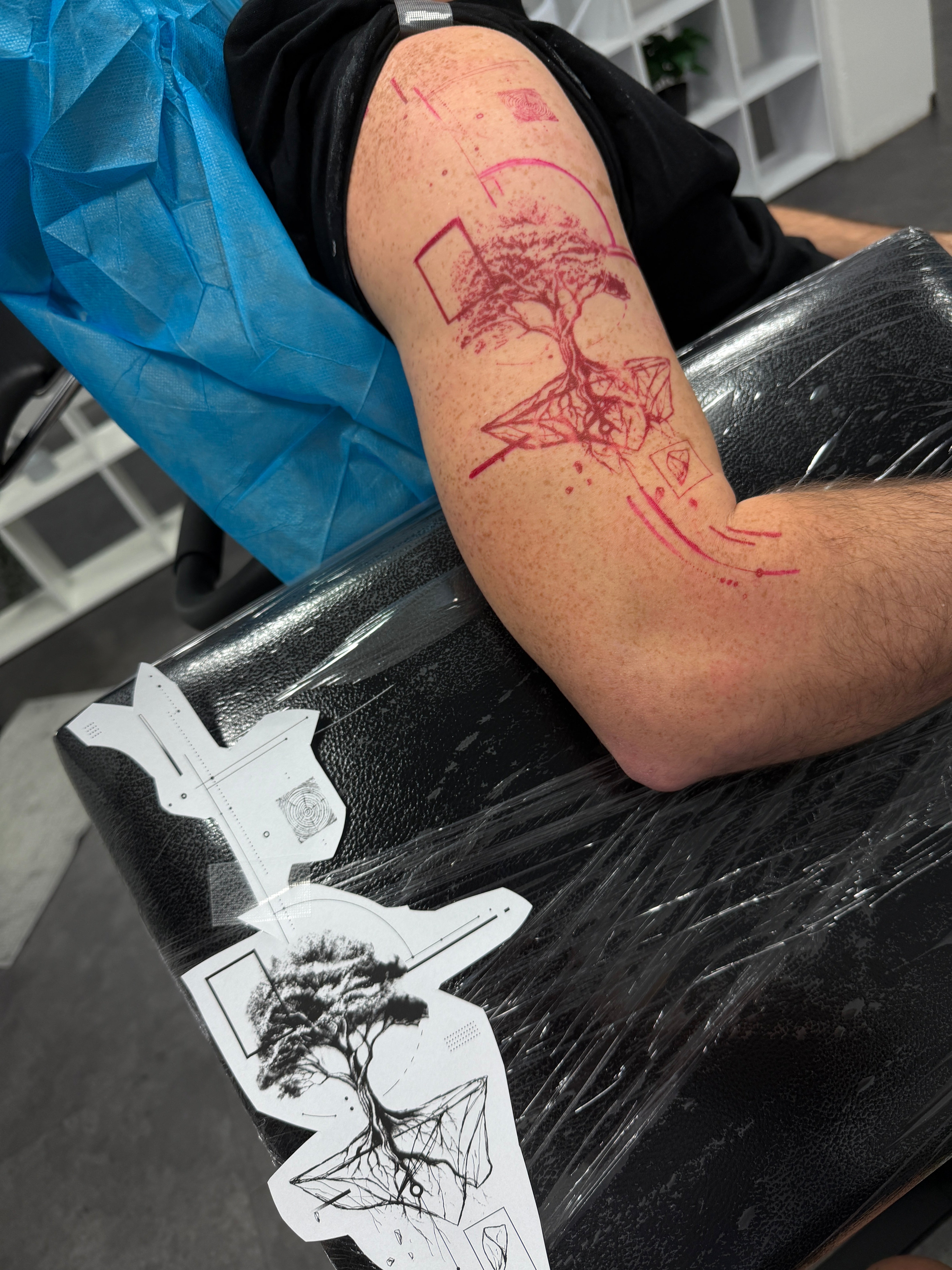
Ease into it. For your first tattoo, choose a spot that you can easily cover (e.g., upper arm, ribs, or thigh). This gives you the opportunity to get used to the feeling of having ink in your skin without everyone seeing it immediately upon first meeting.
3. The "Common Thread": Style over Spontaneity
A common mistake: You see a beautiful mandala, a week later a cool traditional design, and then a realistic skull. All great on their own – but together on one body, it often looks like a random sticker album.
-
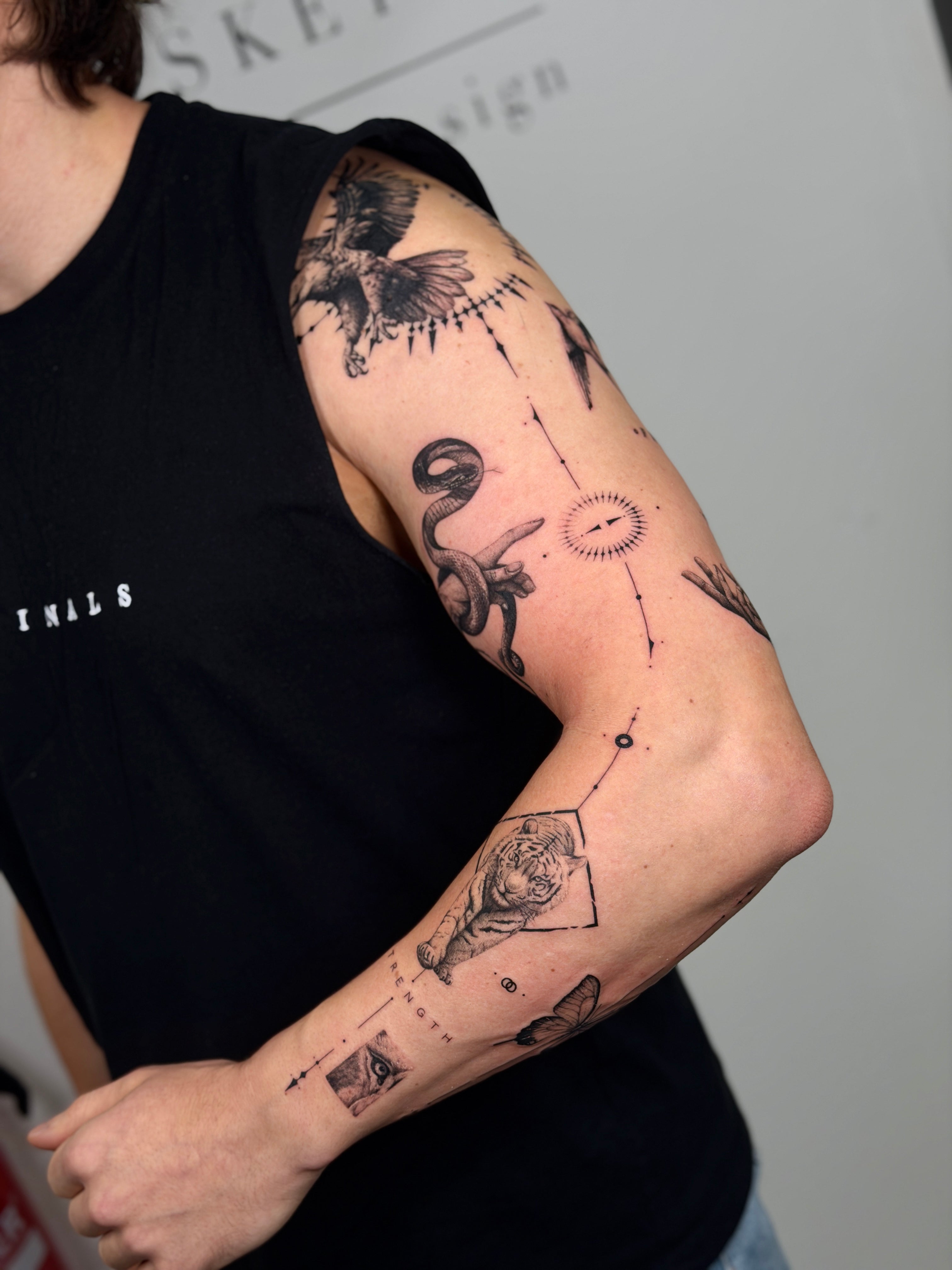
Cohesive Look: Think about the direction you want to go in beforehand. Do you prefer fine lines (fineline), something classic (Old School), or dark blackwork?
-
Aesthetics: A body looks more harmonious if the tattoos are in a similar style. This creates an aesthetic overall picture that looks seamless.
4. The Artist's Signature Style
Every tattoo artist has their own style – their very personal signature. If you like an artist's work, it's best to stick with them (at least for a larger project or a body part).
Why a regular tattoo artist makes sense:
-
Consistency: The line work, shading, and color saturation remain the same.
-
Trust: He or she knows your skin and how it reacts to the ink.
-
Flow: An artist can better adapt new designs to existing works that they themselves have tattooed.
Your first tattoo should feel right, not rushed. Take your time to find your style, choose a thoughtful placement, and trust your tattoo artist's expertise. A tattoo is an investment in yourself – and quality and patience pay off for a lifetime here.
Read more

A tattoo is a decision for life. Why I consciously choose uncompromising quality over mass production – and how I debunk the myth of fineline tattoos that heal poorly.
Fineline and Micro-Realism tolerate no mistakes. Read here how I found my way to these demanding techniques without a mentor and why standing still is not an option for me.